

Size Guide
Bracelet Sizing
A bracelet that fits well sits comfortably on your wrist. Not so tight that it digs in, not so loose that it slides over your hand when you move. The key is to measure your wrist first, then add a small amount of room for comfort.
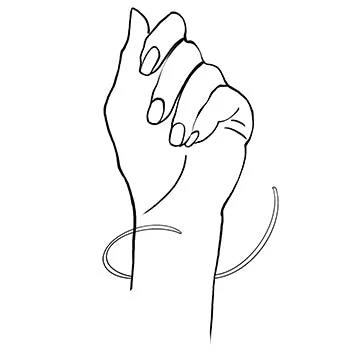
Find Your Wrist Bone
Place the start of a flexible tape measure (or a strip of paper) just below the wrist bone on the hand you wear bracelets on.
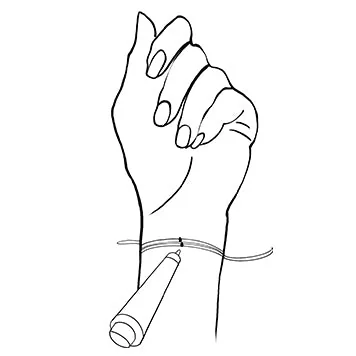
Wrap and Mark
Pull it snug around your wrist and mark where the end meets the tape. You should be able to slide one finger underneath. That’s your baseline.
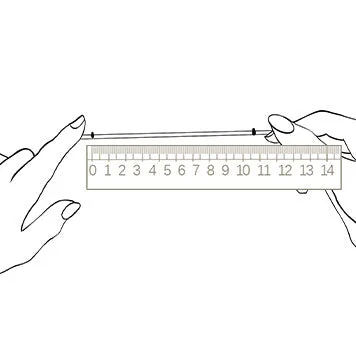
Read the Measurement
If you used paper, lay it flat and measure the marked length against a ruler. That number is your wrist circumference.
Bracelet Size Chart
| Wrist Size (in / cm) | Bracelet Size (in / cm) |
|---|---|
| 5.1–5.5 / 13–14 | 5.9–6.3 / 15–16 |
| 5.9–6.3 / 15–16 | 6.7–7.1 / 17–18 |
| 6.7–7.1 / 17–18 | 7.5–7.9 / 19–20 |
| 7.5–7.9 / 19–20 | 8.3–8.7 / 21–22 |
| 8.3–8.7 / 21–22 | 9.1–9.5 / 23–24 |
| 9.1–9.5 / 23–24 | 9.8–10.2 / 25–26 |
Bangle & Slip-On Bracelet Sizing
Bangles and solid slip-on bracelets work differently from clasp bracelets. Because they don’t open, they have to fit over your hand, not just around your wrist. That means you measure the widest part of your hand, not your wrist. There are two reliable ways to do this.
Method 1: Measure Your Knuckles
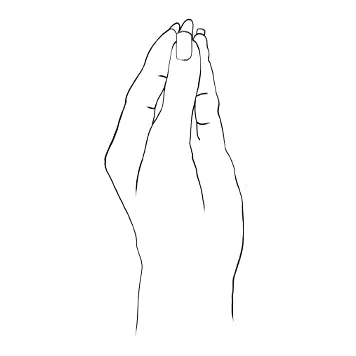
Shape Your Hand
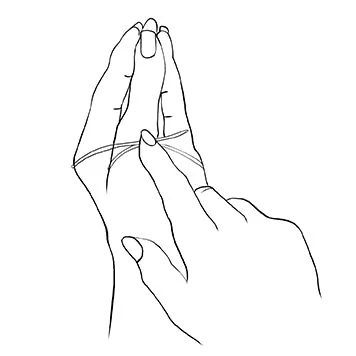
Close your fingers together and bring your thumb across to touch your smallest finger, the same shape your hand makes when you slide a bangle on.
Wrap Around the Knuckles
Wrap a tape measure or strip of paper around the widest part of your knuckles. Mark where the ends meet. Keep it snug, since this is the tightest point the bangle has to pass.
Convert to Diameter
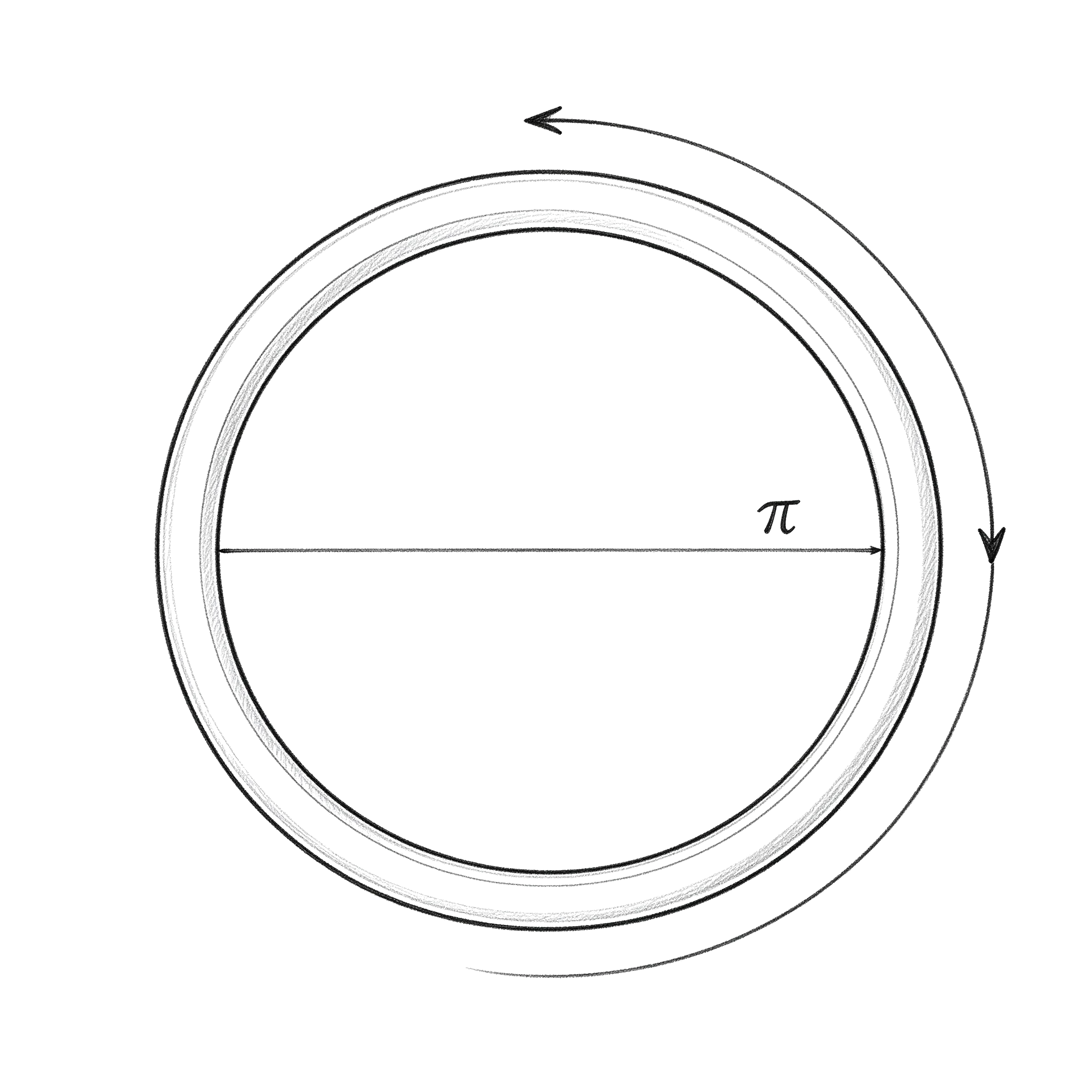
Measure the marked length, then divide by 3.14 to get the inner diameter your bangle needs. Or just match your circumference to the chart below.
Method 2: Measure Your Palm Width
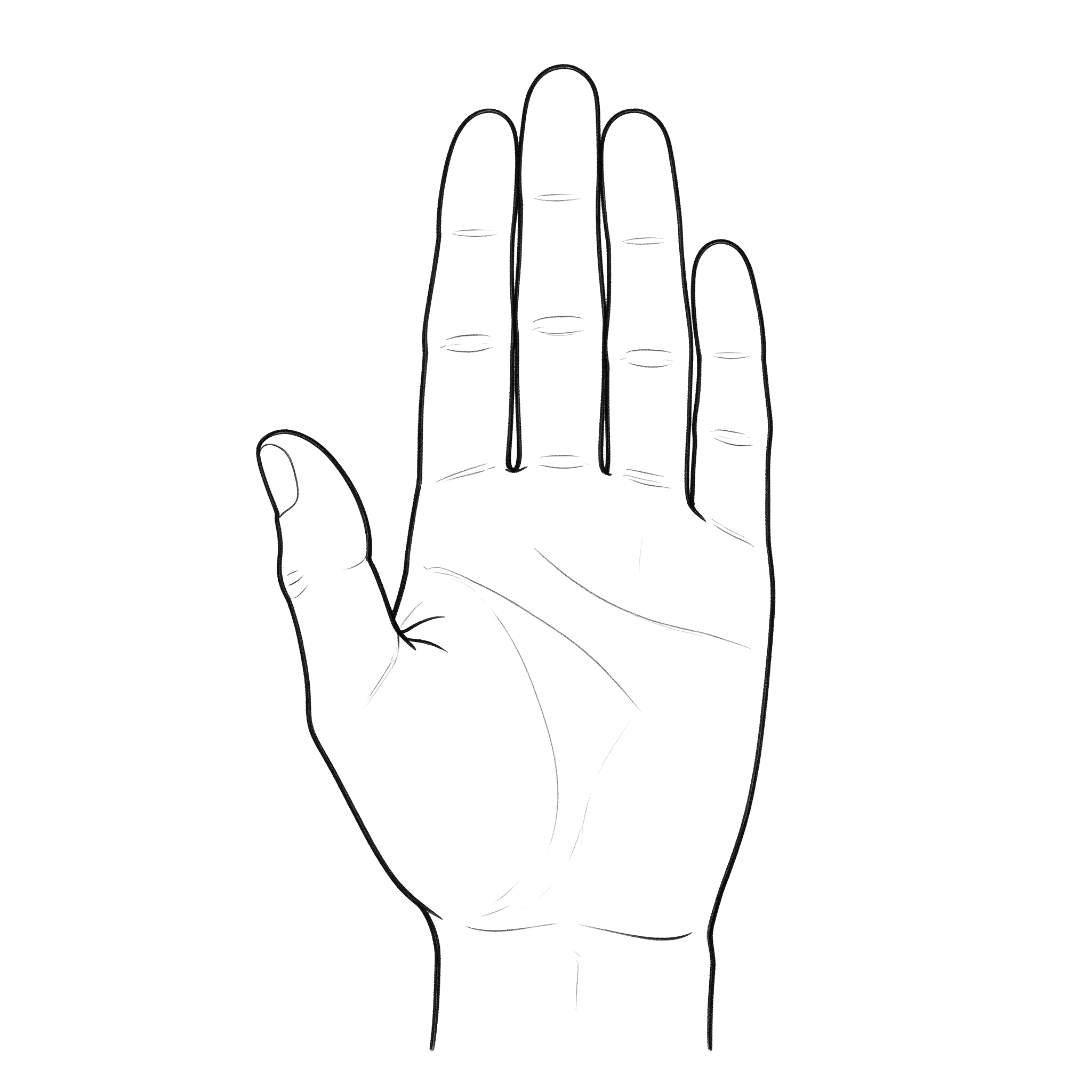
Lay Your Hand Flat
Place your hand palm-down on a table, fingers together and relaxed.
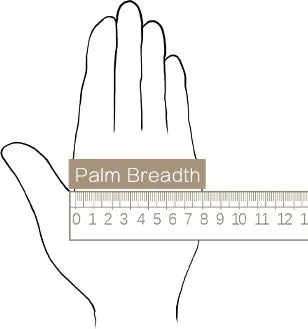
Measure Across the Palm
Use a ruler to measure straight across the widest part of your palm, usually just below the knuckles. Match that width to the chart.
Bangle Size Chart
| Palm Width (in / mm) | Knuckle Circumference (in / mm) | Bangle Inner Diameter (mm) |
|---|---|---|
| 2.4–2.5 / 62–64 | 5.1–5.9 / 130–150 | 50–52 |
| 2.6–2.8 / 66–70 | 5.9–6.7 / 150–170 | 52–54 |
| 2.8–2.9 / 70–74 | 6.7–7.5 / 170–190 | 54–56 |
| 2.9–3.1 / 74–78 | 7.5–8.3 / 190–210 | 56–58 |
| 3.1–3.2 / 78–82 | 8.3–9.1 / 210–230 | 58–60 |
| 3.2–3.4 / 82–86 | 9.1–9.8 / 230–250 | 60–62 |
| 3.4–3.5 / 86–90 | 9.8–10.6 / 250–270 | 62–64 |
| 3.5–3.7 / 90–94 | 10.6–11.4 / 270–290 | 64–66 |
Ring Sizing
A properly sized ring goes on with a slight resistance over the knuckle and then sits comfortably at the base of your finger, not spinning loosely, not pinching the skin. If it goes on too easily, it’s too big; if you have to force it, it’s too small.
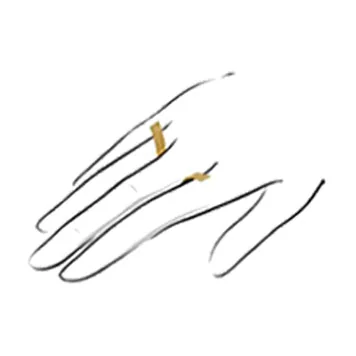
Wrap at the Base
Take a thin strip of paper or a piece of string and wrap it around the base of the finger you’ll wear the ring on.
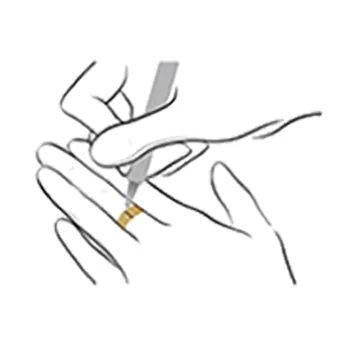
Mark the Overlap
Pull it snug. You should still be able to slide it over your knuckle without pain. Mark where the end overlaps the strip.
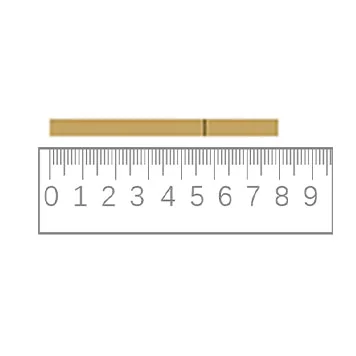
Measure in Millimeters
Lay the strip flat and measure the marked length in millimeters. Find that number in the circumference column of the chart below.
International Ring Size Chart
| USA | UK | France | Germany | Switzerland | China | Circumference (mm) | Diameter (mm) |
|---|---|---|---|---|---|---|---|
| 5 | J½ | 9 | 15.75 | 9 | 9 | 49.3 | 15.7 |
| 6 | L½ | 12 | 16.5 | 11.5 | 12 | 51.8 | 16.5 |
| 7 | O | 14 | 17.25 | 14 | 14 | 54.4 | 17.3 |
| 8 | Q | 16 | 18 | 16.5 | 16 | 56.9 | 18.1 |
| 9 | S | 18 | 19 | 19 | 18 | 59.5 | 18.9 |
| 10 | T½ | 20 | 20 | 21.5 | 20 | 62.2 | 19.8 |
| 11 | V½ | 23 | 20.75 | 24 | 23 | 64.8 | 20.6 |
| 12 | Y | 25 | 21.25 | 27.5 | 25 | 67.2 | 21.4 |
| 13 | Z | 27 | 22 | 30 | 27 | 69.9 | 22.2 |
| 14 | Z+1 | 29 | 23 | 32.5 | 30 | 72.5 | 23.1 |
Necklace Length
Necklace length is less about measurement and more about where you want the piece to sit. Different lengths frame different necklines and draw the eye to different parts of the body. There’s no wrong answer. It comes down to what you’re wearing and what you feel good in.
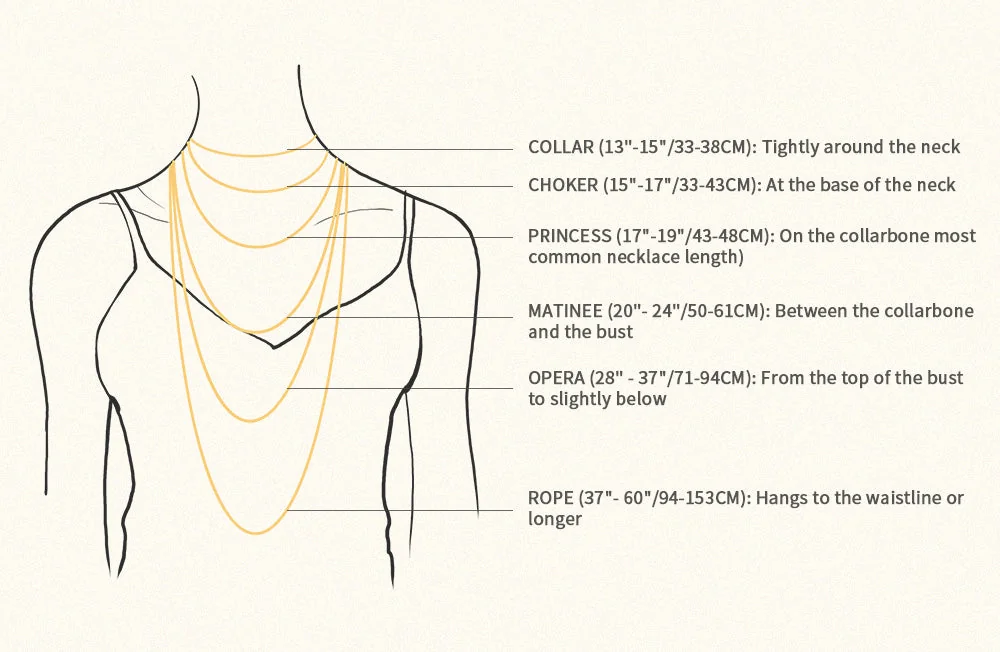
Necklace Length Chart
| Style | Length (in / cm) | Where It Sits |
|---|---|---|
| Collar | 13–15 / 33–38 | Close around the neck, works with off-the-shoulder and V-neck tops |
| Choker | 15–17 / 38–43 | At the base of the neck, pairs well with boatnecks and open collars |
| Princess | 17–19 / 43–48 | On the collarbone, the most versatile length, works with nearly everything |
| Matinee | 20–24 / 50–61 | Between collarbone and bustline, ideal for business and high necklines |
| Opera | 28–36 / 71–91 | Below the bust, elegant for evening wear, can be doubled for a layered look |
| Rope | 36+ / 91+ | To the waist or longer, dramatic, can be knotted, wrapped, or layered |
Buying for Someone Else?
If you’re not sure of someone’s size, here’s what tends to work:
- Bracelets: The average women’s wrist is 6.5–7 inches (16.5–18 cm), which usually maps to a 7.5–8 inch (19–20 cm) bracelet. Most of our bracelets are adjustable or include an extension chain, so there’s a fair amount of forgiveness.
- Rings: The most common women’s ring size is US 7 (UK O, 54.4 mm circumference). If you’re between sizes, go up slightly. A ring that’s a little loose can be resized down, but one that’s too tight can’t be forced on.
- Necklaces: The Princess length (17–19 inches) is the safest choice. It sits at the collarbone and works with almost every neckline.